



Templates
NIST 800-171 Compliance Checklist: 110 Requirements and SPRS
A NIST 800-171 compliance checklist with all 110 Rev. 2 requirements, their SPRS points, Rev. 3 changes, CMMC status and a self-assessment guide. Free Excel.
Learn how to create an effective Data Breach Response Plan Template. Discover best practices and get a free downloadable template.
The threat of a data breach looms large over every organization, regardless of its size or industry. In fact, many governments warn organizations of the need for data breach response plans, such as the Office of the Australian Information Commissioner. With the increasing volume and sophistication of cyberattacks, it's not a matter of if, but when, a breach will occur. Understanding what constitutes a data breach and having a comprehensive response plan in place is crucial for mitigating the potential damage to your organization's reputation, finances, and customer trust. Let's delve into the intricacies of creating and implementing a robust data breach response plan to safeguard your company's digital assets.
A data breach refers to any unauthorized access, disclosure, or acquisition of sensitive or confidential information. Though there are data breach prevention strategies one can implement, there’s always the risk of data being compromised. Data breaches can include:
IT risk management strategies try to prevent data loss or at least minimize the damage of data breaches and other dangers to organizations such as creating disaster recovery plans.
A Data Breach Response Plan is a documented, organized approach to addressing and managing the aftermath of a security incident or data breach. It provides a clear roadmap for responding to a data breach, outlining the steps an organization should take to contain the breach, mitigate its impact, and fulfill legal obligations.
An effective Data Breach Response Plan should include the following key elements:
The first step to your data breach procedure and response plan is to identify key stakeholders including members from IT, legal, communications, human resources, and executive leadership. Determine potential vulnerabilities in the company's data systems and prioritize them based on their potential impact and likelihood of occurrence. Establish clear goals for the response plan, such as minimizing damage to the company's reputation, protecting customer data, and complying with relevant regulations.
Assign specific tasks to individuals or teams within the organization. This could include tasks like technical investigation, communication with affected parties, legal compliance, and public relations. Determine how information will be shared internally and externally during and after a breach, including who needs to be notified and how. Create detailed step-by-step instructions for responding to different types of data breaches, including how to contain the breach, assess the extent of the damage, and restore systems to normal operation. Consider legal requirements for reporting data breaches in relevant jurisdictions and incorporate these into the plan.
Regularly test the effectiveness of the response plan through simulated breach scenarios. This helps identify any weaknesses in the plan and allows team members to practice their roles. Provide training to employees on their roles and responsibilities in the event of a data breach. This should include awareness of common security threats, how to recognize them, and what actions to take if a breach is suspected.
When a company data breach occurs, immediately initiate the response plan according to the predefined procedures. Take immediate action to contain the breach and prevent further unauthorized access to sensitive data. Conduct a thorough investigation to determine the cause and scope of the breach, including assessing what data was compromised and how. Communicate with affected parties, including customers, employees, regulators, and law enforcement agencies, as required by law and company policy. Take steps to minimize the impact of the breach, such as offering credit monitoring services to affected individuals or implementing additional security measures to prevent future incidents. After the breach has been resolved, conduct a post-incident review to identify lessons learned and make any necessary updates to the response plan.
As technology and security threats evolve, it's important to regularly review and update the response plan to ensure it remains effective. Use insights gained from past incidents to improve the response plan and strengthen the company's overall security posture.
To streamline the task of creating a Data Breach Response Plan for our readers, we have developed a comprehensive Data Breach Response Plan Template. This template is available for free download and can be easily customized to fit your organization’s specific needs and requirements. Our template covers all the essential aspects of data breach response, from initial detection to post-breach analysis. It provides a solid foundation that you can adapt to align with your unique organizational structure, industry regulations, and risk profile.
While having a Data Breach Response Plan is crucial, preventing breaches in the first place is equally important. This is where Trio MDM comes in. Our Mobile Device Management (MDM) solution offers robust features to enhance your organization’s data security posture:
By implementing Trio MDM, you can significantly reduce the risk of data breaches and strengthen your overall cybersecurity strategy. This proactive approach complements your Data Breach Response Plan, creating a comprehensive defense against data security threats. Ready to take your data security to the next level? Try Trio’s free demo today and experience firsthand how our MDM solution can protect your organization’s valuable data. Remember, when it comes to data breaches, preparation is key. Download our free Data Breach Response Plan Template and explore Trio MDM to ensure your organization is ready to face any data security challenges that may arise.
Every organization today needs a solution to automate time-consuming tasks and strengthen security. Without the right tools, manual processes drain resources and leave gaps in protection. trio.so is designed to solve this problem, automating key tasks, boosting security, and ensuring compliance with ease.
Every organization today needs a solution to automate time-consuming tasks and strengthen security. Without the right tools, manual processes drain resources and leave gaps in protection. trio.so is designed to solve this problem, automating key tasks, boosting security, and ensuring compliance with ease.





Have questions? We've got answers. This section covers some of the most commonly asked questions related to this topic.
Related
The related industry news, interviews, technologies, and resources.
A NIST 800-171 compliance checklist with all 110 Rev. 2 requirements, their SPRS points, Rev. 3 changes, CMMC status and a self-assessment guide. Free Excel.
A SOC 2 compliance checklist for IT teams: 69 controls mapped to the Trust Services Criteria, with the evidence auditors sample. Free PDF and Excel.

Learn what each Conditional Access policy template does and when to use it. Download ready-to-use ACP templates for identity security.

Complete SAMA compliance checklist for Saudi financial institutions. Domain-by-domain requirements, obligations, and practical implementation steps.
The NCA compliance checklist your team actually needs: ECC-2:2024 domains, NCNICC-1:2025, and what auditors look for as evidence.
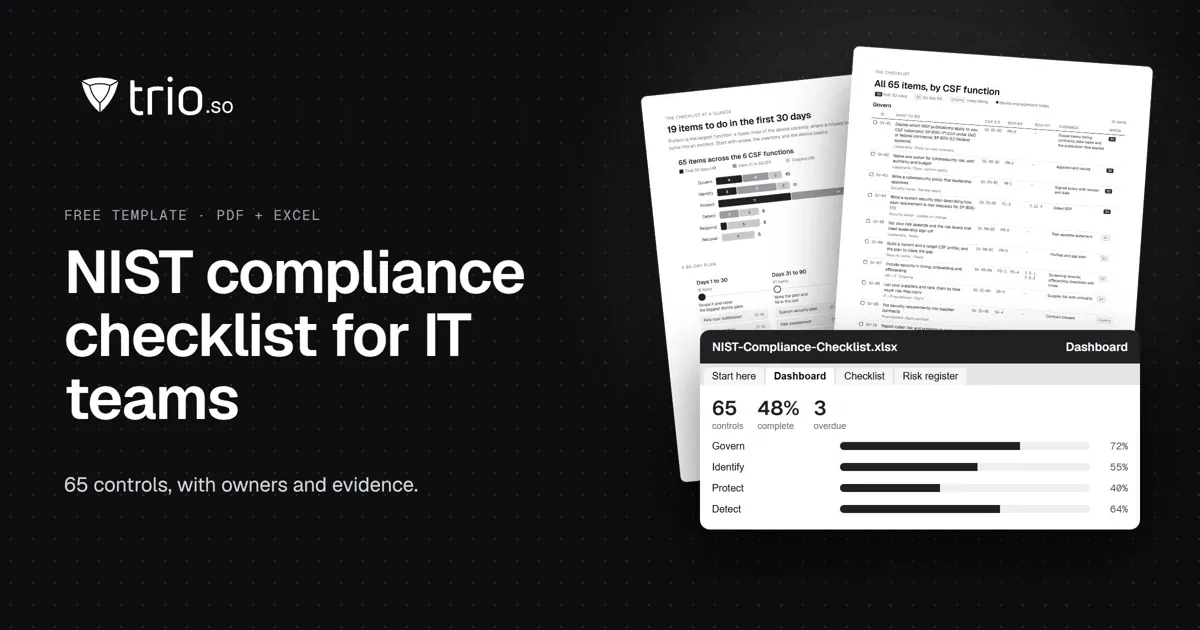
A NIST compliance checklist for IT teams: 65 controls by CSF 2.0 function, mapped to SP 800-53 and 800-171, with an SPRS calculator. Free PDF and Excel.

Feeling overwhelmed by CCPA? Use this comprehensive CCPA Compliance Checklist to secure customer data on mobile devices. Discover how MDM simplifies compliance.

Need an MDM audit checklist? Our guide covers 7 key areas & compliance strategies to ensure your mobile device management is secure and efficient.