

Explained
How to Detect Shadow AI in Your Organization
Shadow AI breaches average $4.63M. Here is how to detect shadow AI using DNS logs, OAuth audits, and your endpoint inventory, step by step.
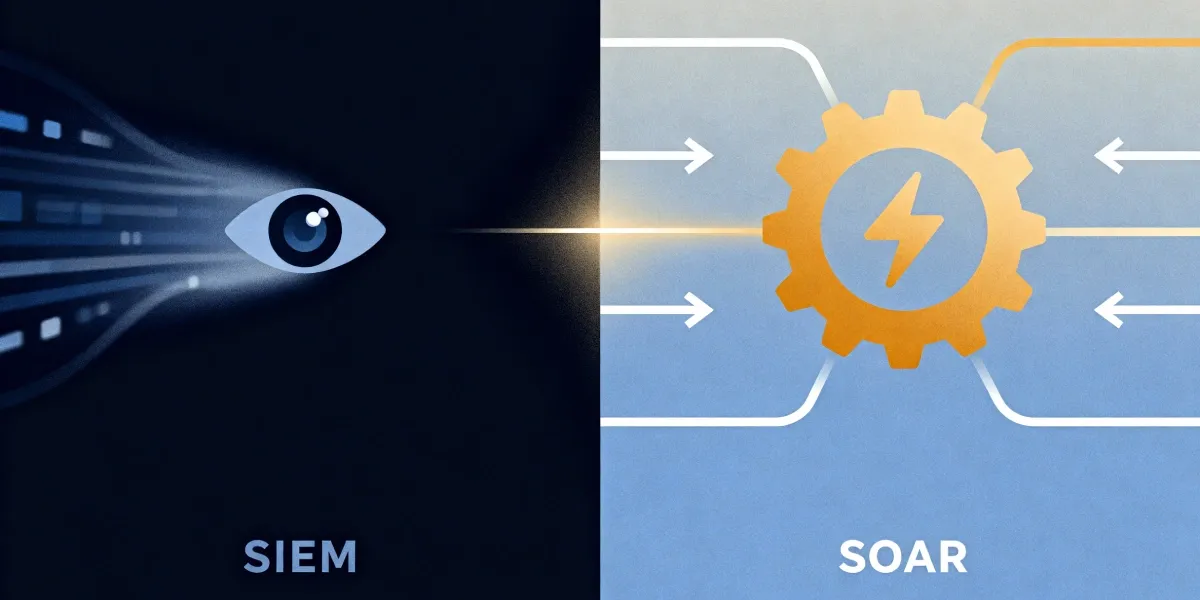
Compare SIEM vs. SOAR to see how log analysis and response automation can be used separately or together to strengthen your security operations.
SOAR vs SIEM represents a fundamental choice in security operations: SOAR (Security Orchestration, Automation, and Response) automates and orchestrates incident response workflows, while SIEM (Security Information and Event Management) centralizes log collection and threat detection. Both technologies work together to create comprehensive security operations, with SIEM identifying threats and SOAR executing automated responses.
Security Information and Event Management (SIEM) serves as the central nervous system for security monitoring operations. SIEM platforms collect, normalize, and analyze security event data from diverse sources across an organization's IT infrastructure, including firewalls, servers, applications, and network devices.
The Global SIEM market size was valued at USD 7.13 billion in 2023 and is poised to grow to USD 28.85 billion by 2032, growing at a CAGR of 16.8%, demonstrating the critical role SIEM plays in modern cybersecurity strategies.
SIEM excels at real-time threat detection through advanced correlation rules that identify suspicious patterns across multiple data sources. When a user attempts unusual login behavior or network traffic deviates from baseline patterns, SIEM systems generate alerts that notify security analysts of potential threats.
Key SIEM capabilities include log management, event correlation, threat detection, compliance reporting, and forensic investigation support. These systems provide the visibility and monitoring foundation that security operations centers rely on for comprehensive threat detection.
Security Orchestration, Automation, and Response (SOAR) platforms focus on streamlining and automating the incident response process. Unlike SIEM systems that primarily detect threats, SOAR takes action by executing predefined workflows called playbooks that respond to security incidents automatically.
SOAR platforms integrate with existing security tools to orchestrate coordinated responses across the entire security infrastructure. When a security incident occurs, SOAR can automatically isolate affected systems, block malicious IP addresses, gather additional forensic data, and create incident tickets without requiring manual intervention.
The three core components of SOAR include security orchestration for coordinating tool integrations, automation for executing repetitive tasks, and incident response for managing the complete response lifecycle. Cloud deployments controlled 71% of the SOAR market share in 2024, propelled by API-first designs that enable seamless integration with modern security architectures.
Modern SOAR platforms leverage artificial intelligence and machine learning to continuously improve playbook execution and adapt response strategies based on evolving threat patterns. This intelligent automation reduces response times from hours to minutes while ensuring consistent, repeatable incident handling procedures.
The fundamental difference between SOAR vs SIEM lies in their operational focus and data processing approaches. SIEM systems concentrate on data collection and threat identification, while SOAR platforms prioritize response automation and workflow orchestration.
Data Sources and Integration SIEM solutions primarily rely on log data from network devices, servers, and applications, using protocols like Syslog to centralize information. SOAR platforms cast a wider integration net, connecting with security tools, threat intelligence feeds, ticketing systems, and communication platforms through APIs and connectors.
Detection vs Response Focus
SIEM excels at pattern recognition and anomaly detection through correlation rules and behavioral analytics. These systems identify potential threats but require human analysts to investigate alerts and determine appropriate responses. SOAR systems assume threats have been identified and focus on executing automated response workflows that can contain, investigate, and remediate incidents.
Automation Capabilities While SIEM provides automated data collection and alert generation, most investigation and response activities remain manual processes. SOAR platforms offer extensive automation through customizable playbooks that can perform complex multi-step responses involving multiple security tools simultaneously.
Scalability and Performance SIEM systems face scaling challenges as log volumes increase, often requiring significant hardware resources and tuning to maintain performance. SOAR platforms scale more effectively by automating repetitive tasks that would otherwise overwhelm security teams as alert volumes grow.
SOAR automation delivers measurable improvements in security operations efficiency and effectiveness. Organizations implementing SOAR solutions typically experience dramatic reductions in mean time to respond (MTTR) as automated playbooks execute response actions at machine speed rather than waiting for human analysts.
Accelerated Incident Response Automated playbooks can execute complex response procedures in minutes rather than hours, containing threats before they cause significant damage. For example, when SOAR detects a phishing email, it can automatically quarantine the message, block the sender, remove similar emails from all inboxes, and update security tools with new indicators of compromise.
Consistent Response Quality Human analysts may handle identical incidents differently based on experience, workload, or stress levels. SOAR ensures every incident receives the same thorough, systematic response by following predefined playbooks that incorporate security best practices and organizational policies.
Resource Optimization By automating routine tasks like data enrichment, indicator lookups, and basic response actions, SOAR frees skilled analysts to focus on complex investigations and strategic security initiatives. This optimization becomes critical as organizations struggle with cybersecurity talent shortages.
Enhanced Threat Intelligence SOAR platforms automatically enrich alerts with contextual information from threat intelligence feeds, historical data, and external sources. This enrichment provides analysts with comprehensive context for rapid decision-making without manual research delays.
SIEM platforms provide essential compliance reporting capabilities that help organizations meet regulatory requirements and demonstrate security control effectiveness. These systems generate detailed audit trails and compliance reports required by standards like GDPR, HIPAA, PCI DSS, and SOX.
Automated Report Generation SIEM solutions automatically generate compliance reports showing security control activities, incident response metrics, and policy violations. This automation reduces the manual effort required for compliance audits while ensuring consistent, comprehensive documentation.
Log Retention and Management Organizations must retain security logs for specified periods to meet regulatory requirements. SIEM platforms provide centralized log storage with automated retention policies, ensuring compliance while managing storage costs through archiving and compression.
Real-time Monitoring Evidence Compliance frameworks require continuous security monitoring and incident detection capabilities. SIEM systems provide documented evidence of 24/7 monitoring activities, alert generation, and response actions that demonstrate due diligence in protecting sensitive data.
Trio's device management platform integrates with SIEM integration capabilities to provide comprehensive visibility across managed endpoints, ensuring compliance reporting covers the complete IT infrastructure including mobile devices and remote endpoints.
SOAR integration with SIEM creates a powerful security operations workflow that combines threat detection with automated response capabilities. This integration enables organizations to detect threats through SIEM analytics and immediately execute automated containment and investigation procedures through SOAR playbooks.
Bi-directional Data Flow SIEM systems send high-priority alerts to SOAR platforms, which then execute appropriate response playbooks. SOAR platforms feed response actions and investigation results back to SIEM systems, enriching the security data repository with additional context and outcomes.
Alert Prioritization and Enrichment When SIEM generates an alert, SOAR can automatically enrich it with additional threat intelligence, user information, and asset data before determining the appropriate response. This enrichment helps reduce false positives and ensures responses match the actual threat severity.
Coordinated Multi-tool Response SOAR orchestrates responses across multiple security tools beyond just SIEM, including endpoint detection and response (EDR) systems, firewalls, identity management platforms, and communication tools. This coordination ensures comprehensive incident containment and investigation.
The integration also supports data protection impact assessment (DPIA) requirements by automatically documenting all security actions and maintaining detailed audit trails of incident response activities.
Alert fatigue represents one of the most significant challenges facing modern security operations centers. 56% of large companies receive 1,000 or more alerts per day, and 83% of cybersecurity employees say they're struggling to cope with the overwhelming alert volume, leading to missed threats and analyst burnout.
Automated Alert Triage SOAR platforms reduce alert fatigue by automatically triaging incoming alerts based on predefined criteria, threat intelligence, and contextual factors. Low-priority alerts can be handled entirely through automation, while high-priority incidents receive immediate analyst attention with pre-gathered context and suggested response actions.
False Positive Reduction SOAR systems use machine learning and historical data analysis to identify patterns in false positive alerts, automatically filtering out known benign activities before they reach human analysts. This filtering dramatically reduces the number of alerts requiring manual investigation.
Contextual Alert Enhancement Rather than presenting raw alerts, SOAR enriches each notification with relevant context including user behavior history, asset criticality, threat intelligence matches, and similar past incidents. This context enables analysts to make faster, more informed decisions about alert handling.
Workflow Standardization Consistent playbook execution ensures that routine alerts receive standardized handling procedures, reducing the cognitive load on analysts who no longer need to remember complex multi-step procedures for common incident types.
Understanding when to rely on SIEM alone versus introducing SOAR for automation depends on organizational maturity, alert volumes, and security team capabilities. Different scenarios benefit from different approaches to security operations.
SIEM-Only Scenarios Organizations with mature security teams, manageable alert volumes, and extensive custom analytics may benefit from SIEM-focused approaches. These environments typically have experienced analysts who can efficiently handle manual investigation and response procedures while maintaining low false positive rates through finely tuned correlation rules.
SOAR Implementation Triggers High alert volumes, compliance workflows requiring documented response procedures, and repetitive incident types signal the need for SOAR automation. When security teams spend more than 50% of their time on routine tasks that could be automated, SOAR implementation becomes cost-effective.
Threat Triage Optimization SOAR excels in environments where threat triage consumes significant analyst time. Automated playbooks can perform initial investigation steps, gather relevant context, and present analysts with pre-analyzed incident summaries that accelerate decision-making.
Compliance Automation Organizations subject to strict regulatory requirements benefit from SOAR's ability to execute and document standardized response procedures. This automation ensures consistent compliance with incident response requirements while reducing the risk of human error in critical procedures.
Modern security operations increasingly require multi factor authentication solutions and third-party risk management integrated into both SIEM and SOAR workflows to provide comprehensive security coverage.
Successfully implementing SOAR vs SIEM requires careful planning around technical prerequisites, organizational readiness, and integration complexity. Organizations must assess their current security maturity and infrastructure before selecting appropriate solutions.
Technical Prerequisites for SIEM SIEM implementation requires robust network infrastructure capable of handling high-volume log ingestion, sufficient storage capacity for long-term log retention, and skilled personnel capable of creating and maintaining correlation rules. Organizations must also establish log sources across their entire IT infrastructure and ensure consistent log formatting and timing.
SOAR Implementation Requirements
SOAR platforms need well-defined incident response procedures, mature security tool deployments with API connectivity, and documented playbooks that reflect organizational security policies. Teams must also have sufficient training to manage and modify automated workflows as threat landscapes evolve.
Organizational Readiness Assessment SOC maturity levels significantly impact implementation success. Organizations with immature incident response processes may need to establish manual procedures before automating them through SOAR. Similarly, SIEM implementations require existing log management practices and security monitoring capabilities.
Integration Planning Both technologies require extensive integration planning to ensure compatibility with existing security tools, identity management systems, and operational processes. Organizations should prioritize integration with Active Directory integration, SSH key management best practices, and FIDO2 authentication systems to maintain security consistency.
Measuring the effectiveness of SOAR vs SIEM implementations requires tracking specific performance metrics that demonstrate improvements in security operations efficiency and threat response capabilities.
Mean Time to Detect (MTTD) Improvements SIEM platforms significantly reduce MTTD by providing real-time monitoring and automated alert generation. Organizations typically see MTTD improvements from days or weeks to minutes or hours after implementing comprehensive SIEM monitoring across their infrastructure.
Mean Time to Respond (MTTR) Acceleration SOAR automation delivers dramatic MTTR improvements by executing response actions immediately upon threat detection. Automated playbooks can reduce response times from hours to minutes for routine incidents, while complex investigations benefit from pre-gathered context and automated initial response steps.
Alert Backlog Reduction Combined SIEM and SOAR implementations typically reduce alert backlogs by 60-80% through automated triage, false positive filtering, and automated handling of routine incidents. This reduction allows analysts to focus on genuine threats requiring human expertise.
Investigation Consistency Metrics SOAR ensures consistent investigation procedures across all incidents of the same type, reducing the variability in response quality that occurs with manual processes. Organizations can measure this consistency through standardized investigation completeness scores and response action compliance rates.
Integration with Okta vs Ping Identity solutions and public key infrastructure example implementations helps organizations maintain consistent identity verification throughout their automated security workflows.
The cybersecurity landscape continues evolving with artificial intelligence and machine learning fundamentally transforming both SIEM and SOAR capabilities. These emerging trends shape how organizations should approach security operations planning and technology investments.
AI-Driven Dynamic Playbooks Modern SOAR platforms leverage AI to suggest playbook modifications based on attack pattern evolution and response outcome analysis. These dynamic capabilities enable security teams to adapt their automated responses to new threat tactics without requiring extensive manual playbook updates.
Adaptive SIEM Rules Machine learning algorithms now enable SIEM systems to automatically tune correlation rules based on environmental changes and false positive feedback. This adaptive capability reduces the ongoing maintenance burden associated with traditional rule-based detection systems.
XDR Integration Convergence Extended Detection and Response (XDR) platforms increasingly integrate SIEM and SOAR capabilities into unified security operations platforms. This convergence simplifies technology management while providing comprehensive visibility and response capabilities across the entire security infrastructure.
Cloud-Native Security Operations The shift toward cloud-native security architectures affects both SIEM and SOAR deployment models, with API-first designs enabling more flexible integration patterns and elastic scaling capabilities that match modern infrastructure patterns.
Organizations planning future security operations should consider HRIS integration, DLP integration, and the ability to add MDM to Apple Business Manager as part of their comprehensive security orchestration strategy.
SOAR vs SIEM represents complementary approaches to security operations rather than competing alternatives. SIEM provides the foundational threat detection and monitoring capabilities that identify security incidents, while SOAR delivers the automation and orchestration needed to respond effectively at scale.
Organizations achieve optimal security operations by implementing both technologies in an integrated approach that leverages SIEM's detection capabilities with SOAR's automation strengths. This combination addresses the growing challenge of alert fatigue while ensuring comprehensive threat coverage and rapid response capabilities.
The decision between SOAR vs SIEM often comes down to organizational maturity and operational needs. Mature security teams with manageable alert volumes may start with SIEM for detection capabilities, while organizations struggling with high alert volumes and resource constraints should prioritize SOAR automation to maximize team efficiency.
Organizations investing in these capabilities today position themselves for long-term success in an increasingly complex threat landscape.
For comprehensive device management that integrates with modern security operations, Trio's platform provides the visibility and control needed to secure managed endpoints across SIEM and SOAR implementations.
Every organization today needs a solution to automate time-consuming tasks and strengthen security. Without the right tools, manual processes drain resources and leave gaps in protection. Trio MDM is designed to solve this problem, automating key tasks, boosting security, and ensuring compliance with ease.
Every organization today needs a solution to automate time-consuming tasks and strengthen security. Without the right tools, manual processes drain resources and leave gaps in protection. Trio MDM is designed to solve this problem, automating key tasks, boosting security, and ensuring compliance with ease.





Related
The related industry news, interviews, technologies, and resources.
Shadow AI breaches average $4.63M. Here is how to detect shadow AI using DNS logs, OAuth audits, and your endpoint inventory, step by step.
Declarative device management is Apple's answer to MDM polling delays and unreliable compliance data — here's how it works and how to start using it.
An APNS certificate is what lets your MDM platform send commands to iPhones, iPads, and Macs — here's how to create, renew, and protect it.
Device location history works differently on Android, iPhone, and MDM platforms. Here's what each one actually stores and how to access it.
Unlike full-device VPN, per-app VPN tunnels only the apps you choose — and without MDM enforcement, users can bypass it entirely on unmanaged devices.
A remote wipe on a Mac is only possible if the right tools are in place first — here is how MDM, Find My, and native macOS each handle device erasure.
Compare SOC 2 Type 1 and Type 2 audits. Discover key differences, audit scope, duration, and how to choose for compliance needs.
Compare managed and unmanaged devices - definitions, security differences, control levels, and how to choose the right approach for IT.