

Explained
How to Detect Shadow AI in Your Organization
Shadow AI breaches average $4.63M. Here is how to detect shadow AI using DNS logs, OAuth audits, and your endpoint inventory, step by step.
Master the difference between internal audit vs compliance. We break down key challenges, and show how MDM automates IT governance.
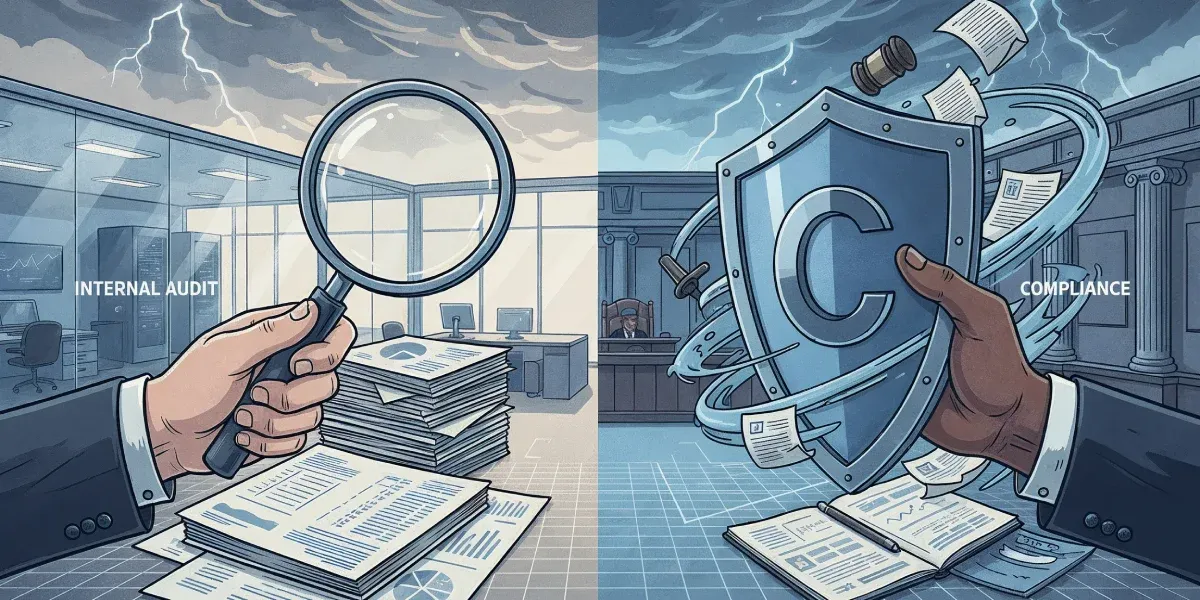
When IT administrators discuss governance, two terms often tend to blur together: internal audit versus compliance. On paper, they sound similar, but in practice they serve very different purposes. IT compliance is about meeting external rules and regulations, while internal audit checks whether your systems, policies, and processes actually work as intended.
Here’s the challenge. Many IT teams find themselves preparing for audits only when a deadline looms or scrambling to align with a regulation after a client request. That reactive approach not only increases stress but also leaves gaps in security and accountability.
The good news is that when internal audit and compliance are understood as complementary, they become powerful tools for building trust, reducing risk, and keeping operations efficient.
Internal audit is not just a box-ticking exercise. Think of it as your organization’s built-in truth detector. The goal is to independently assess whether policies, systems, and processes are doing what they are supposed to. In IT, that often means checking whether security controls are effective, whether data access rules are followed, and whether critical risks are being monitored.
For IT admins, this process can feel like both a safety net and a magnifying glass. It highlights what’s working well but also shines a light on blind spots that can lead to bigger problems down the road. Internal audit functions also provide leadership with evidence for better decision-making, whether it’s about investing in new security tools or tightening access policies.
Done right, an internal audit creates a feedback loop. It keeps teams honest, drives continuous improvement, and gives everyone confidence that the business is truly secure.
If internal audit is about self-checking, compliance is about proving you can play by the rules set by others. Regulations like GDPR, HIPAA compliance, SOX compliance, and SOC 2 compliance are not optional. They exist to protect data, ensure accountability, and safeguard customer trust. Failing to meet them can mean steep fines, reputational damage, or even losing the right to do business in certain sectors.
For IT admins, compliance often feels like chasing a moving target. Standards evolve, frameworks overlap, and every client or partner seems to ask for proof of a different certification. That’s where regulatory compliance becomes more than paperwork. It’s about creating processes and systems that consistently align with requirements, not scrambling for evidence at the last minute.
Getting compliance right builds credibility. It reassures customers, keeps regulators off your back, and prevents unnecessary firefighting when audits come around.
Even with definitions in place, the overlap between audit and compliance can still feel messy. Both involve checks, reports, and the occasional headache. The distinction lies in perspective. Internal audit looks inward, asking, “Are our processes effective?” Compliance looks outward, asking, “Are we meeting external rules?”
Think of compliance as the referee, making sure you follow the rulebook. Internal audit is more like the coach, reviewing your performance and suggesting changes so you can win the next match. Both roles matter, but they serve different masters.
For IT admins, this difference matters because it shapes priorities. Preparing for audit vs compliance obligations at the last minute creates chaos. Understanding which is which helps in planning resources, assigning responsibilities, and making sure no gaps fall through the cracks. When these two functions are aligned, the business avoids costly surprises.
Audit and compliance are often treated as separate silos, but in practice, they’re strongest when connected. Compliance sets the baseline rules, and audit tests whether those rules are enforced and effective. For IT admins, that connection becomes visible in day-to-day processes.
Take identity management as an example. A compliance management process might require quarterly reviews of privileged accounts. The internal controls audit would then pull log data, verify whether the reviews happened, and test if inactive accounts were truly deactivated. If the audit uncovers accounts still active beyond policy deadlines, that’s a direct gap between compliance on paper and compliance in practice.
Another scenario is patch management. Compliance requires devices to meet patch timelines. Internal audit checks patch deployment records, scans for unpatched systems, and confirms the process prevents vulnerabilities. When both functions work together, IT teams gain proof that the controls are not only written down but are actually doing their job.
Managing audit and compliance side by side sounds straightforward, but in reality, it introduces friction points for IT admins. Some of the most common challenges include:
Each of these challenges reinforces why integrated tools and smarter workflows are needed.
Mobile Device Management is not just about keeping devices under control. It can directly support both audits and compliance by automating evidence collection, enforcing policies, and providing visibility that IT admins often struggle to achieve manually. Instead of spending weeks pulling logs, MDM consolidates data into reports that are audit-ready.
With compliance monitoring built in, admins can track device health, patch status, and access policies in real time. Pair that with compliance monitoring software, and the result is continuous oversight instead of periodic panic. This shift reduces audit fatigue, closes gaps before regulators find them, and gives IT teams confidence that their environment is consistently aligned with requirements.
Managing audits and compliance will never be effortless, but the right tools can make it manageable. If you’re tired of juggling spreadsheets, chasing logs, or dreading the next audit request, it may be time to modernize your approach.
Trio MDM simplifies compliance by enforcing policies automatically, producing audit-ready reports, and giving you real-time visibility across your devices. No more last-minute scrambles or sleepless nights before an auditor walks in.
Why wait until the next compliance deadline to make changes? Try Trio MDM today and see how continuous monitoring and smart automation can save you time, reduce risk, and keep your team focused on what actually matters.
👉 Start Free Trial
👉 Book a Free Demo
The debate of internal audit vs compliance is not about which one matters more. Each plays a distinct role, and when combined, they strengthen your organization’s ability to stay secure, credible, and resilient. Compliance sets the baseline by aligning you with regulations, while internal audit confirms that your processes actually work and adapt over time.
For IT admins, the real challenge is managing both without burning out. That’s where technology steps in. With the right MDM solution, you can automate reporting, enforce policies, and continuously monitor your environment. Instead of treating audits as fire drills and compliance as endless paperwork, both become opportunities to build trust and demonstrate control.
Ultimately, businesses that embrace this dual approach gain an advantage. They reduce risk, improve efficiency, and show stakeholders that they take governance seriously. Trio MDM makes this easier, turning complexity into clarity.
Every organization today needs a solution to automate time-consuming tasks and strengthen security. Without the right tools, manual processes drain resources and leave gaps in protection. Trio MDM is designed to solve this problem, automating key tasks, boosting security, and ensuring compliance with ease.
Every organization today needs a solution to automate time-consuming tasks and strengthen security. Without the right tools, manual processes drain resources and leave gaps in protection. Trio MDM is designed to solve this problem, automating key tasks, boosting security, and ensuring compliance with ease.





Related
The related industry news, interviews, technologies, and resources.
Shadow AI breaches average $4.63M. Here is how to detect shadow AI using DNS logs, OAuth audits, and your endpoint inventory, step by step.
Declarative device management is Apple's answer to MDM polling delays and unreliable compliance data — here's how it works and how to start using it.
An APNS certificate is what lets your MDM platform send commands to iPhones, iPads, and Macs — here's how to create, renew, and protect it.
Device location history works differently on Android, iPhone, and MDM platforms. Here's what each one actually stores and how to access it.

Unlike full-device VPN, per-app VPN tunnels only the apps you choose — and without MDM enforcement, users can bypass it entirely on unmanaged devices.
A remote wipe on a Mac is only possible if the right tools are in place first — here is how MDM, Find My, and native macOS each handle device erasure.
Compare SOC 2 Type 1 and Type 2 audits. Discover key differences, audit scope, duration, and how to choose for compliance needs.

Compare managed and unmanaged devices - definitions, security differences, control levels, and how to choose the right approach for IT.