



Templates
NIST 800-171 Compliance Checklist: 110 Requirements and SPRS
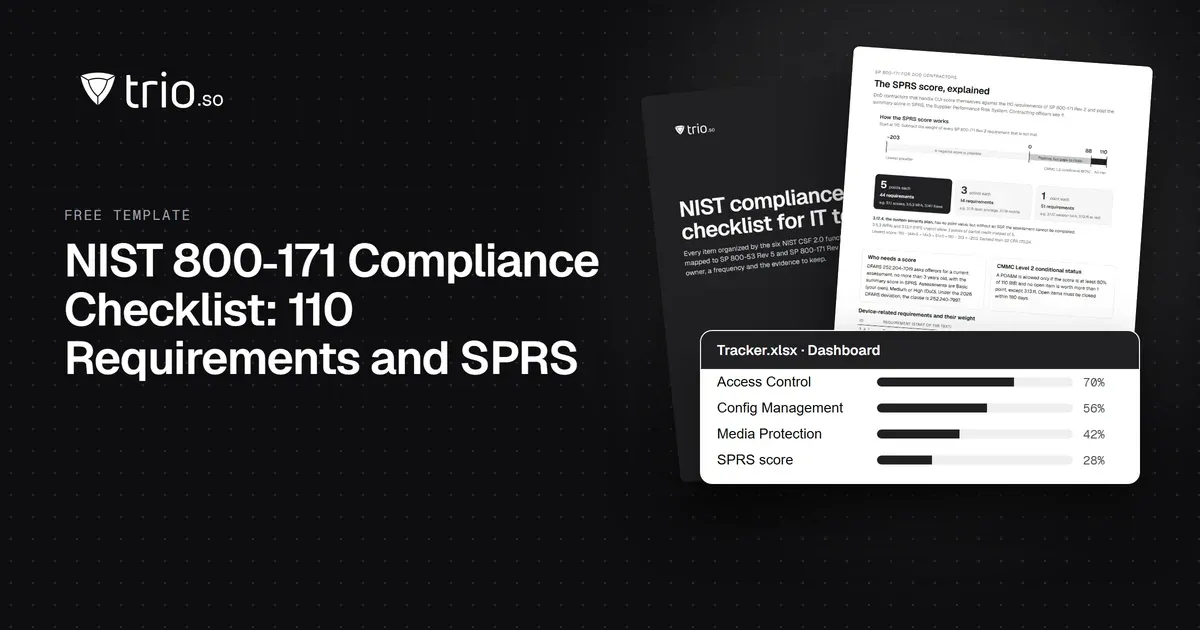
A NIST 800-171 compliance checklist with all 110 Rev. 2 requirements, their SPRS points, Rev. 3 changes, CMMC status and a self-assessment guide. Free Excel.
Learn how to secure your servers with this ultimate server hardening checklist. Download a free server hardening checklist now.


Content writer, trio.so
Servers are the backbone of modern IT infrastructure, storing sensitive data and running critical applications. But with great importance comes great responsibility. Ensuring that your servers are secure is vital to protecting your organization’s operations from data breaches, compliance issues, and costly downtime. This is where server hardening steps in. In this blog, we’ll walk you through a comprehensive server hardening checklist that not only minimizes vulnerabilities but also strengthens your entire IT ecosystem.
Server hardening refers to the process of securing a server by reducing its attack surface. It involves configuring the operating system, network, and applications to minimize vulnerabilities, remove unnecessary services, and implement robust security measures. The key goals of server hardening include:
Server hardening aligns with cybersecurity best practices, such as those outlined by the Center for Internet Security (CIS Benchmarks), ensuring consistency and adherence to industry standards.
Server hardening is essential to protect your infrastructure against common vulnerabilities, such as:
These vulnerabilities, if left unaddressed, make servers prime targets for attacks. The consequences of an unsecured server can be severe:
The cost of neglecting server hardening is staggering. Organizations face breach remediation expenses, legal liabilities, operational downtime, and the loss of customer trust. In extreme cases, these financial impacts can cripple a business.
With the shift to cloud-based infrastructure, server hardening has become even more critical for securing virtual environments. To protect dynamic and scalable cloud servers, organizations must:
This proactive approach not only mitigates risks but also strengthens resilience against emerging threats. The shared responsibility model emphasizes collaboration between organizations and cloud providers to ensure robust security measures are in place.
Recent ransomware attacks exploiting weak server configurations illustrate the importance of proper hardening measures. Organizations with robust security policies could have mitigated—or entirely avoided—these damages. Proactive server hardening ensures:
By prioritizing server hardening, organizations can protect their assets, maintain compliance, and avoid the staggering financial and reputational consequences of neglecting this essential security practice. 
Many industries require organizations to adhere to strict compliance standards, such as GDPR, HIPAA, and PCI-DSS, to protect sensitive data and ensure security best practices. Server hardening is integral to meeting these requirements. By implementing measures like encryption, robust access controls, and logging, you can demonstrate compliance and avoid penalties during audits. Additionally, hardening servers supports the integrity and confidentiality mandates set forth by regulatory frameworks, making it a critical component of any compliance strategy.
Let's dive into a detailed checklist of actionable steps to harden your servers effectively. Follow these measures to minimize risks and strengthen your IT infrastructure.
Start by securing the foundation of your server: the operating system.
A robust network security strategy is essential for server hardening.
Mismanaged user accounts are one of the biggest vulnerabilities for servers.
Proactive monitoring ensures you catch issues before they escalate.
Applications and databases are common targets for cyberattacks.
Even the best virtual security measures can be undermined by poor physical security.
Once hardening measures are implemented, validate their effectiveness.
To streamline your hardening efforts, we’ve created a practical server hardening checklist that includes actionable steps, recommended settings, and compliance-related tasks. This checklist will help you:
Download the Server Hardening Checklist now to kickstart your hardening process and secure your IT infrastructure effortlessly.
Server hardening is not a one-and-done process. Regular maintenance is crucial to ensure lasting security.
Proactive maintenance not only ensures server security but also prevents minor issues from escalating into costly problems. A well-maintained server is a resilient server. 
Managing server security manually can be overwhelming. This is where Trio’s Mobile Device Management (MDM) solution comes in.
With Trio, you can simplify the hardening process and focus on other critical tasks. Request a free demo to see how Trio can transform your server security strategy.
Securing your servers with a comprehensive server hardening checklist is essential for protecting sensitive data, maintaining operational efficiency, and meeting compliance standards. By following the actionable steps outlined in this guide and leveraging tools like the server hardening checklist, you can build a robust defense against threats. Take the next step today: Download the checklist and try Trio’s MDM solution to secure your servers effortlessly.
Every organization today needs a solution to automate time-consuming tasks and strengthen security. Without the right tools, manual processes drain resources and leave gaps in protection. trio.so is designed to solve this problem, automating key tasks, boosting security, and ensuring compliance with ease.
Every organization today needs a solution to automate time-consuming tasks and strengthen security. Without the right tools, manual processes drain resources and leave gaps in protection. trio.so is designed to solve this problem, automating key tasks, boosting security, and ensuring compliance with ease.





Have questions? We've got answers. This section covers some of the most commonly asked questions related to this topic.
Related
The related industry news, interviews, technologies, and resources.
A NIST 800-171 compliance checklist with all 110 Rev. 2 requirements, their SPRS points, Rev. 3 changes, CMMC status and a self-assessment guide. Free Excel.
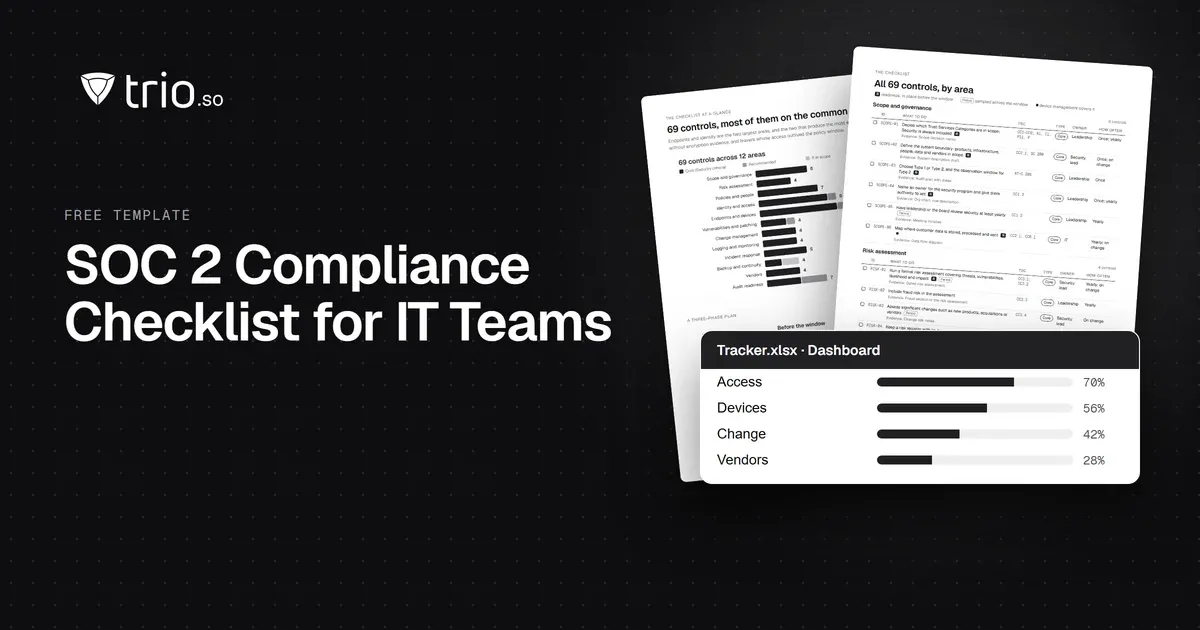
A SOC 2 compliance checklist for IT teams: 69 controls mapped to the Trust Services Criteria, with the evidence auditors sample. Free PDF and Excel.

Learn what each Conditional Access policy template does and when to use it. Download ready-to-use ACP templates for identity security.

Complete SAMA compliance checklist for Saudi financial institutions. Domain-by-domain requirements, obligations, and practical implementation steps.
The NCA compliance checklist your team actually needs: ECC-2:2024 domains, NCNICC-1:2025, and what auditors look for as evidence.
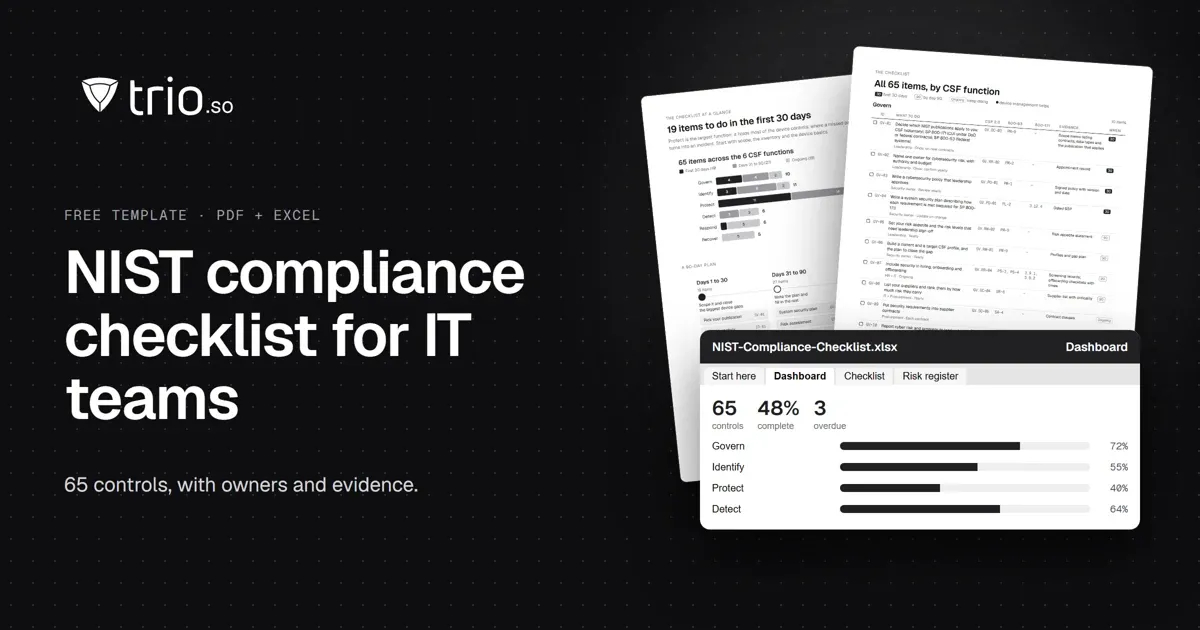
A NIST compliance checklist for IT teams: 65 controls by CSF 2.0 function, mapped to SP 800-53 and 800-171, with an SPRS calculator. Free PDF and Excel.
Feeling overwhelmed by CCPA? Use this comprehensive CCPA Compliance Checklist to secure customer data on mobile devices. Discover how MDM simplifies compliance.

Need an MDM audit checklist? Our guide covers 7 key areas & compliance strategies to ensure your mobile device management is secure and efficient.